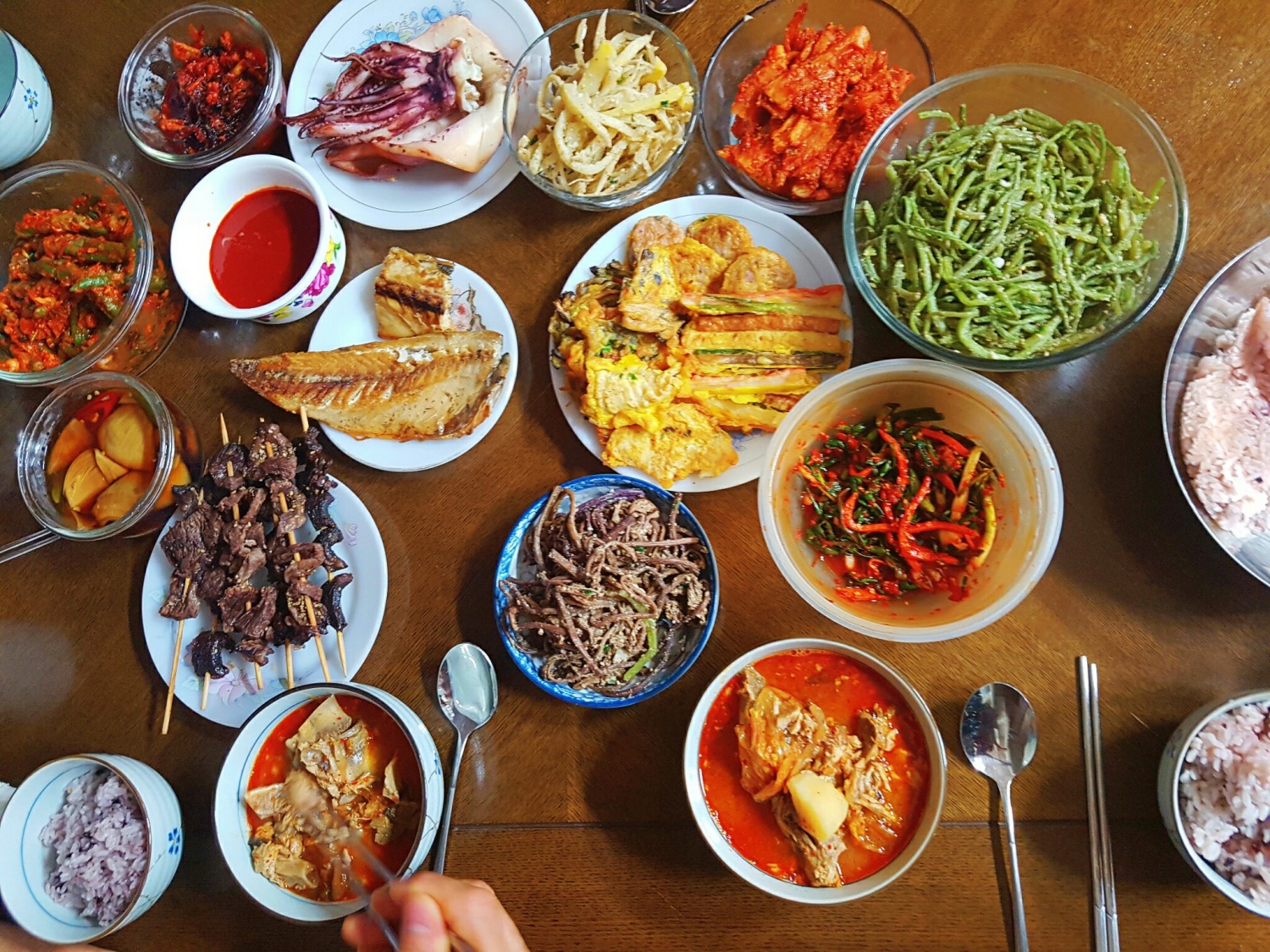
As a child, my grandmother and mother expressed their love through cooking. Back then, sitting down to a home-cooked meal felt like an ordinary part of daily life—so routine that I never stopped to appreciate it. But as time has passed, I’ve come to realize that these meals were more than just food—they were experiences that shaped my senses, perceptions, and the way I engage with the world.
I was a picky eater. I refused certain dishes because the texture was too mushy, the vegetables changed color when cooked, the sesame seeds weren’t evenly distributed, or the ginger flavor was too strong. No matter what, I always found a reason not to eat something. Yet, my grandmother and mother never gave up. They tried countless tricks to get me to eat, sometimes even saying, "One day, when we’re gone, you’ll regret not eating this." Their words turned out to be true. Now that I can no longer taste my grandmother’s cooking and rarely have the chance to enjoy my mother’s homemade meals while living abroad, I find myself longing for the very foods I once refused.
Ironically, the dishes I disliked as a child have now become the ones I try the hardest to recreate, making me crave them even more. This shift highlights the power of experience. It’s not just about liking or disliking something in the moment—it’s about how experiences transform our perspectives over time. The way I once viewed food with hesitation and resistance mirrors the way we sometimes approach unfamiliar ideas, cultures, or even challenges in life. The foods I once dismissed have taken on new meaning, and things I couldn’t appreciate before have become deeply valuable to me now.
The way we experience food is a reflection of how we experience the world—through habits, biases, and personal history. Just as I once rejected certain flavors before learning to embrace them, we often resist the unfamiliar in other aspects of life. But with experience comes openness, understanding, and growth. Experience changes our viewpoints, breaks down biases, and broadens our understanding of the world, shaping not only our taste but also our perspective on everything we encounter.
Experience is not just about accumulating knowledge—it has the power to shift our mindset, emotions, and perspectives. Cognitive biases, fears, and anxieties can all be reshaped through experience. Psychologist Daniel Kahneman, in his book Thinking, Fast and Slow, explains how our past experiences influence our decision-making and shape the way we perceive events. Through experience, we learn new patterns and adapt to future challenges.
Just as my perspective on certain foods changed through experience, UX design also relies on this concept of transformation. Users may initially find an interface unfamiliar or even frustrating, but repeated exposure and interaction can lead to a sense of familiarity and ease. This is why experience is so crucial in UX design—it’s not just about immediate usability but about guiding users through a learning process that helps them adapt and engage over time.
The impact of experience extends beyond design and into everyday life. Recently, I went through a difficult period while job searching. One day, feeling frustrated and lost, I impulsively walked into a Starbucks near my home with my resume. Fortunately, I was hired on the spot, and most of my shifts were spent working at the register, directly interacting with customers. Since the store was located inside a hospital, many of our regular customers were doctors, nurses, and patients.
One interaction remains vivid in my memory. A nurse, who always ordered an Americano Misto, decided to buy a cheese stick one day. However, the barcode on the package wouldn’t scan. After multiple attempts, I grabbed another package, but that one wouldn’t scan either. Frustrated, she sighed and muttered, "Nothing in my life ever works out the first time."
At that moment, I felt an unexpected wave of empathy. To her, this wasn’t just about a malfunctioning barcode—it was another reminder of the obstacles and frustrations that seemed to define her life. Instead of simply apologizing and moving on, I asked her to wait and brought over ten more cheese sticks, determined to find one that would scan. In those few seconds, my only thought was, Please, let just one of these work. I wasn’t trying to push a sale—I simply wanted to offer her a small moment of relief, a tiny win in what seemed to be a long streak of disappointments.
Finally, one of the barcodes scanned. "There we go!" I said and handing her the cheese stick. She let out a soft smile, I felt relieved that at least this wasn’t another disappointment added to her day. Even if it was just a small thing, I was glad that, for once, something had gone right for her.
I believe experience shapes people. A single positive interaction may not erase years of frustration, but it can create a small shift, a seed of possibility that things don’t always have to go wrong.

In the past, design processes often prioritized efficiency and standardization over individual experiences. Systems were built for the majority, favoring bureaucratic structures and mass appeal, often neglecting the nuances of personal experiences. However, today, individual voices are being heard, and past oversights are being corrected as we recognize the importance of human-centered design.
This shift is exactly why UX design matters. Don Norman, in The Design of Everyday Things, emphasizes that "good design is centered around the user's experience—it’s about more than just an interface." Jakob Nielsen also explains that "user experience extends beyond the moment of interaction; it includes the emotions and expectations before and after using a product." In other words, UX design is not just about making a product functional—it’s about shaping the way people interact with it over time.
Companies that invest in better user experiences don’t just see higher sales—they create deeper connections with their users. But beyond business success, we must ask ourselves: What does a better experience truly mean for people? What aspects of life are still constrained by outdated experiences, and how can we design for meaningful change?
Experience matters because it holds the potential for transformation. It helps us grow, broadens our perspectives, and enables us to build a better world. UX design, at its core, should embrace this philosophy—not just improving functionality but deeply understanding and addressing human experiences.
Designing for experience isn’t just about usability—it’s about shaping how people perceive, interact, and ultimately transform through the products we create.




I am currently available for new projects and collaborations, bringing a wealth of experience in crafting innovative, user-centered designs